 Call Us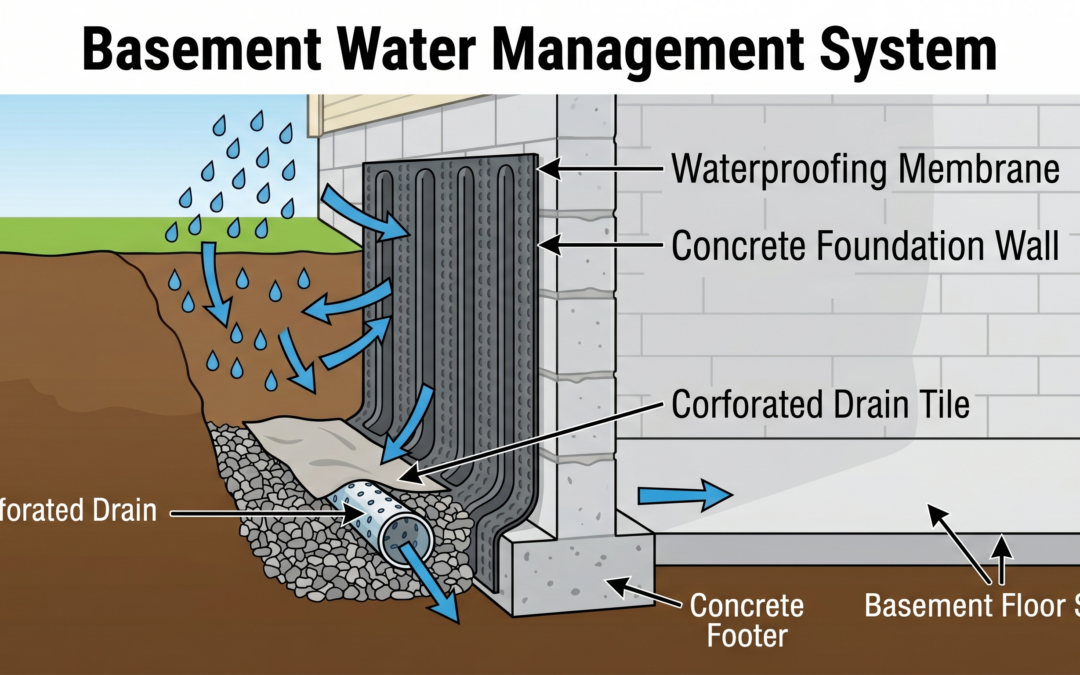
A wet basement can lead to serious problems for homeowners. Water intrusion can damage drywall, flooring, insulation, and personal belongings. Over time, excess moisture may also contribute to mold growth, wood rot, and foundation damage. One of the most effective ways to protect a basement from water intrusion is with a basement waterproofing membrane.
Many homeowners hear the term but are not fully sure what a basement waterproofing membrane does or why it matters. Understanding how these systems work can help you make informed decisions about protecting your home and avoiding expensive repairs in the future.
What Is a Basement Waterproofing Membrane?
A basement waterproofing membrane is a protective barrier installed on basement walls or foundations to stop water from entering the home. These membranes are designed to resist moisture and redirect water away from the structure before it can seep through cracks or porous concrete surfaces.
The membrane may be installed on the exterior side of the foundation, the interior basement walls, or both depending on the condition of the property and the waterproofing strategy being used.
Most membranes are made from durable waterproof materials such as:
- Rubberized asphalt
- Polyurethane
- Modified bitumen
- Plastic or polyethylene sheets
- Liquid-applied coatings
The main purpose of a basement waterproofing membrane is to create a continuous barrier between the soil and the basement structure.
Why Water Gets Into Basements
Before understanding how basement waterproofing works, it helps to know why basements leak in the first place.
Homes are constantly exposed to groundwater, rainwater, and moisture in the surrounding soil. When the soil around a foundation becomes saturated, hydrostatic pressure builds against the basement walls. This pressure pushes water through cracks, joints, and porous concrete surfaces.
Common causes of basement water intrusion include:
- Poor drainage around the home
- Clogged gutters and downspouts
- Foundation cracks
- Improper grading
- High water tables
- Aging waterproofing systems
Even small amounts of water can create long-term problems if ignored.
How a Basement Waterproofing Membrane Works
A basement waterproofing membrane acts as a shield that blocks moisture from penetrating the foundation walls. The membrane either repels water completely or channels it toward a drainage system where it can safely exit the property.
Exterior waterproofing membranes are typically applied directly to the outside foundation walls after excavation. Once installed, the membrane creates a watertight seal around the structure.
Interior waterproofing membranes are often installed along basement walls to direct water toward interior drainage systems or sump pumps.
The type of membrane used depends on several factors, including:
- The age of the home
- Existing water damage
- Soil conditions
- Foundation material
- Severity of leaks
A professional inspection can help determine which solution is best for your home.
Types of Basement Waterproofing Membrane Systems
There are several types of systems available for residential properties.
Sheet Membranes
Sheet membranes are pre-manufactured waterproof sheets that are applied directly to the foundation walls. These systems are highly durable and provide excellent moisture resistance.
Many sheet membranes feature adhesive backing that helps create a secure seal against the concrete surface.
Sheet membranes are commonly used for exterior foundation waterproofing projects.
Liquid Waterproofing Membranes
Liquid waterproofing membranes are applied as a liquid coating that cures into a seamless waterproof barrier. These products are popular because they can conform to uneven surfaces and fill small cracks.
Liquid systems are often used in areas with irregular foundation shapes or hard-to-reach surfaces.
Drainage Membranes
Drainage membranes combine waterproofing protection with water management. These systems feature dimpled materials that create an air gap between the foundation wall and surrounding soil.
Water is directed downward into drainage systems instead of building pressure against the wall.
Drainage membranes are commonly paired with exterior French drains and sump pump systems.
Benefits of Installing a Basement Waterproofing Membrane
Installing a waterproofing membrane offers several important advantages for homeowners.
Protects Against Water Damage
Water intrusion can destroy flooring, drywall, furniture, and storage items. A waterproofing membrane helps keep moisture out before damage occurs.
Reduces Mold and Mildew Growth
Damp basements create ideal conditions for mold growth. By controlling moisture, a basement waterproofing membrane helps create a healthier indoor environment.
This is especially important for homeowners with allergies, asthma, or respiratory concerns.
Helps Protect the Foundation
Excess moisture around the foundation can contribute to cracks, shifting, and structural problems over time. Waterproofing systems help reduce water pressure against the home.
Increases Usable Basement Space
A dry basement can be safely used for storage, recreation rooms, home offices, or finished living areas. Waterproofing helps homeowners get more value from their property.
Improves Home Value
Waterproofed basements are attractive to potential buyers. A professionally installed basement waterproofing membrane may improve resale value and reduce concerns during home inspections.
Signs You May Need a Basement Waterproofing Membrane
Many homeowners wait until severe leaks appear before contacting a waterproofing contractor. Early warning signs should not be ignored.
Common indicators include:
- Damp basement walls
- Musty odors
- Water stains
- Peeling paint
- Visible mold growth
- Cracks in foundation walls
- Standing water
- Efflorescence on concrete surfaces
If you notice these issues, it may be time to have your basement professionally evaluated.
Interior vs Exterior Basement Waterproofing Membrane Systems
Both interior and exterior waterproofing systems have benefits depending on the home’s condition.
Exterior basement waterproofing membrane systems stop water before it reaches the foundation walls. These systems are highly effective but often involve excavation around the home.
Interior waterproofing systems manage water after it enters the basement area. These solutions are typically less invasive and may work well for moderate moisture problems.
In some cases, combining both methods provides the strongest long-term protection.
Why Professional Installation Matters
Installing a basement waterproofing membrane requires specialized knowledge and equipment. Improper installation can lead to gaps, drainage issues, and recurring leaks.
Professional waterproofing contractors understand how to evaluate soil conditions, identify water entry points, and select the proper materials for each property.
An experienced contractor can also identify related foundation or crawl space issues that may contribute to moisture problems.
For homeowners in Maryland, seasonal weather changes and heavy rainfall can place additional stress on foundations and basement walls. Choosing a reliable waterproofing contractor is important for long-term protection.
Protect Your Home With Maryland Mold & Waterproofing
A basement waterproofing membrane can play a major role in protecting your home from moisture damage, mold growth, and foundation issues. Whether your basement already shows signs of water intrusion or you want to prevent future problems, professional waterproofing solutions can help safeguard your investment.
Maryland Mold & Waterproofing provides residential waterproofing, foundation repair, and crawl space solutions designed to keep homes dry and protected year-round. Contact Maryland Mold & Waterproofing today to schedule an inspection and learn more about the right basement waterproofing membrane system for your home.
FAQ
How long does a basement waterproofing membrane last?
A professionally installed waterproofing membrane can last several decades depending on the material used and the condition of the foundation. Regular inspections can help identify minor issues before they become larger problems.
Can waterproofing membranes help with basement humidity?
Yes. Waterproofing membranes help reduce moisture intrusion which can lower humidity levels inside the basement and decrease the risk of mold growth and musty odors.
Is exterior waterproofing better than interior waterproofing?
Exterior waterproofing stops water before it reaches the foundation walls, while interior systems manage water after it enters. The best option depends on the severity of the moisture issue, the home’s construction, and drainage conditions.
John Rivers is the guiding force behind Maryland Mold and Waterproofing, specializing in comprehensive waterproofing and mold remediation services. With a focus on protecting buildings from the damaging effects of water and mold, John has established the company as a leader in creating safe, dry, and healthy living environments. His commitment to using advanced techniques and materials ensures effective solutions for every project. Maryland Mold and Waterproofing is dedicated to educating clients on the importance of moisture control and mold prevention, offering expert advice and services to address and prevent these issues effectively.